




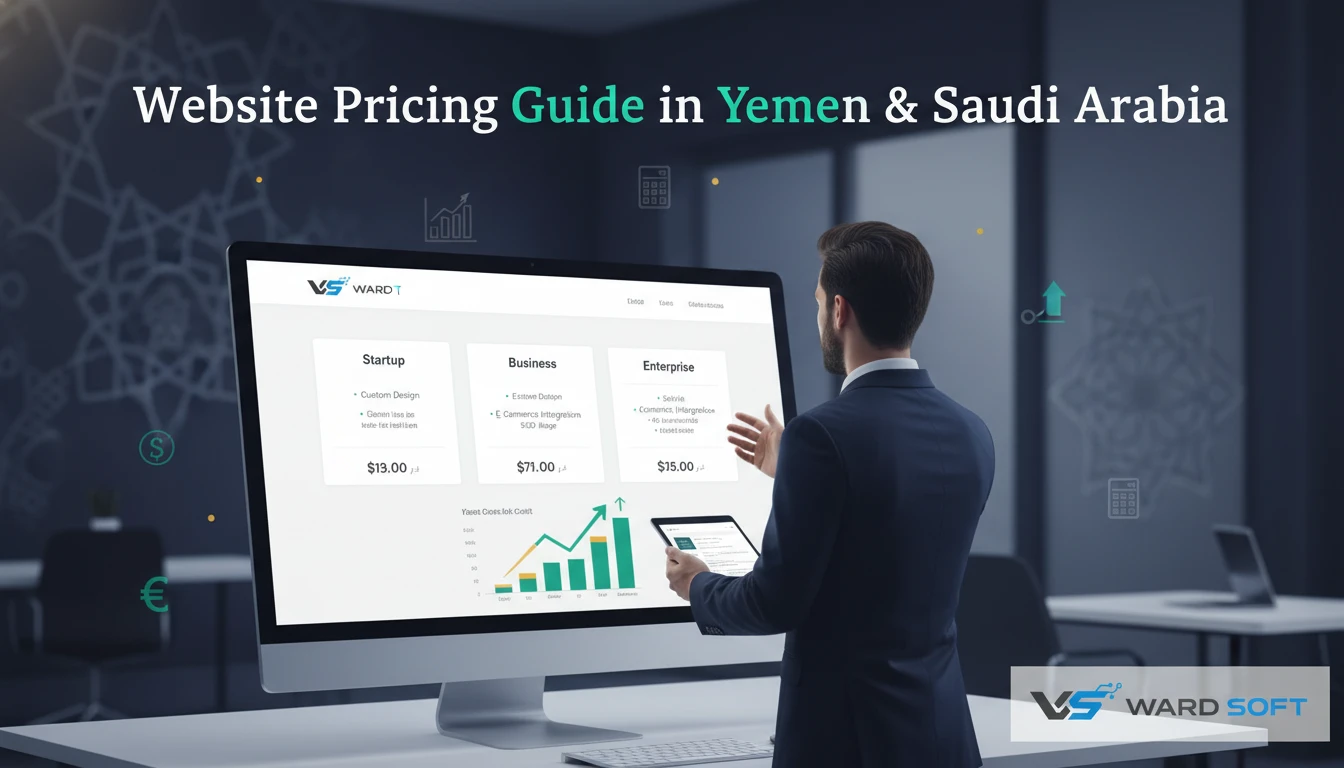
Website Design & Development Pricing Guide — How Much Does a Professional Website Cost in Yemen & Saudi Arabia?
Looking for a clear and realistic price to budget your new website? This guide explains pricing ranges, cost factors, and how to choose an offer that delivers real value — not just a cheap number.
Why This Guide Matters Before Requesting Quotes
Price differences often reflect differences in deliverables: a simple design ≠ SEO-ready design, and a 100-product e-commerce store differs from a 1000-product store. This guide helps you understand what you’re really paying for and avoid surprises.
General Pricing Ranges (Reference Only)
Note: Prices vary based on complexity, features, and integrations (payment gateways, accounting systems, shipping). Use these ranges as a starting point and request a detailed quote.
-
Simple Informational Website (Landing / Brochure)
Description: Homepage + internal pages (About, Services, Contact). What to Expect: Template-based design with minor customizations. Range: Small projects — reasonable starting value (request a detailed quote for confirmation). -
Dynamic Company Website
Description: CMS system, multiple pages, portfolio/gallery, advanced contact forms. What to Expect: Partially custom development or WordPress with basic SEO setup. Range: Medium to high depending on customization. -
Medium E-Commerce Store
Description: Product management, catalog, product pages, shopping cart, payment gateways, sales reports. What to Expect: Payment & shipping integration, store management training. Range: Higher than informational sites; depends on product count and integrations. -
Custom Solutions / SaaS Platforms / Advanced Systems
Description: Custom web application, booking system, payment gateways with advanced reporting, ERP integration. What to Expect: Full custom development, performance testing, long-term support & maintenance. Range: High — requires detailed estimation and delivery terms.
Factors Affecting Pricing (Why the Cheapest Option Isn’t Always Best)
- Custom Design vs. Templates: Custom design costs more but provides unique identity and better user experience.
- Number of Pages & Products: Each additional page or product increases workload and testing time.
- Integrations (Payment, Shipping, ERP): Connecting external systems requires extra development and testing.
- SEO & Performance: SEO-ready and optimized websites require specialized skills and higher investment.
- Maintenance & Support: Does the price include post-launch support or only the launch phase?
- Hosting & Infrastructure: Is hosting included or just the delivery of the site?
How to Compare Quotes: Quick Evaluation Checklist
- Request a detailed deliverables list showing all components to be delivered.
- Check support and warranty period (SLA) and hourly rates for post-launch modifications.
- Ask for a timeline (Milestones) with deliverables and testing stages.
- Review portfolio and live website examples similar to your project.
- Compare based on results (SEO, speed, scalability), not just price.
Tips to Reduce Costs Without Sacrificing Quality
- Start with an MVP (Minimum Viable Product) and add features later.
- Use customizable templates to save development time if unique design is not required.
- Ensure contracts specify ownership of code and data to avoid future costs.
What WardSoft Offers You (Typical Proposal)
- Free project requirements assessment within 48 hours.
- Detailed quote including deliverables, timeline, and support terms.
- Post-launch marketing services (SEO, paid campaigns, WhatsApp marketing).
Frequently Asked Questions (FAQ)
Can I get a final price without a detailed contract?
Rarely — the exact price depends on project requirements and integrations. The best approach is a brief assessment followed by a detailed quote.
How long does it take to develop a medium e-commerce store?
Typically 6–12 weeks depending on complexity (number of products, payment gateways, shipping integration).







Comments
Comments will be available soon