





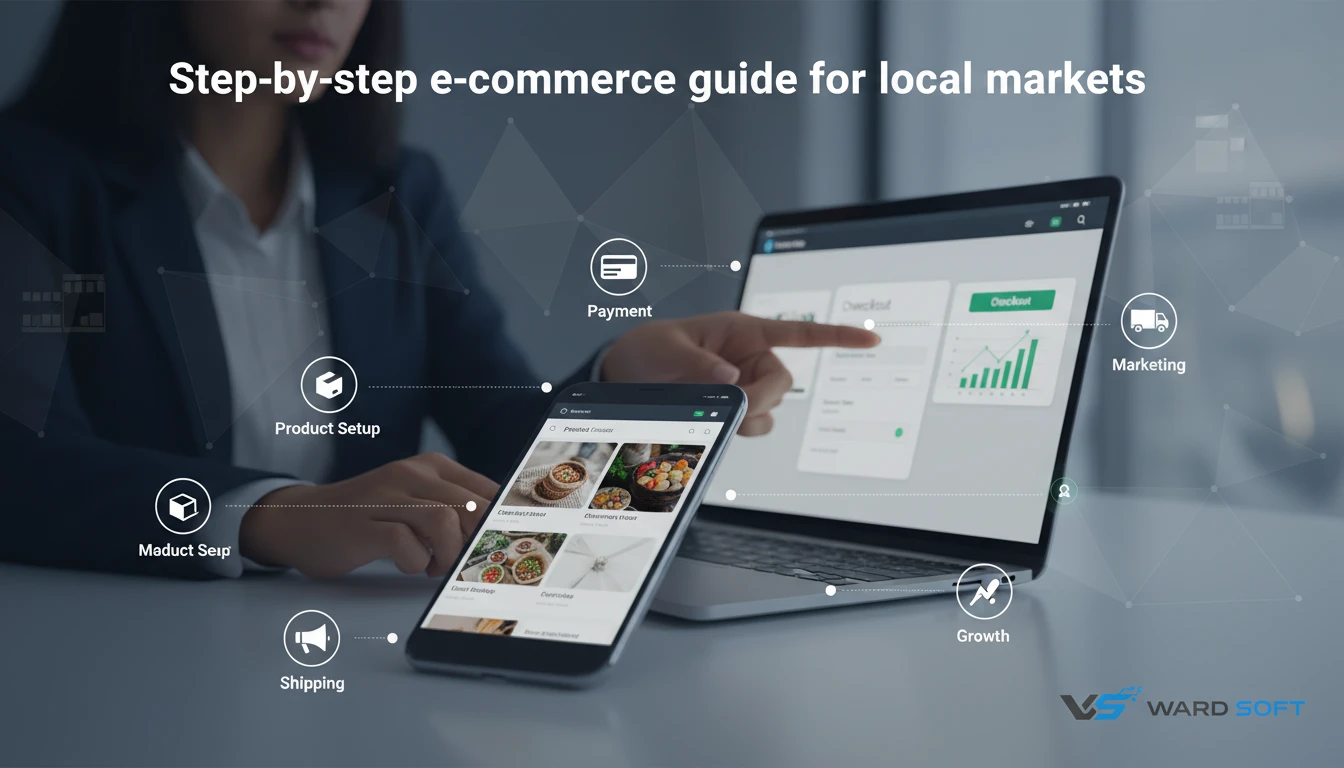
Practical Guide to Building a Successful Online Store in Yemen — From Idea to First Sale
Launching an e-commerce store in Yemen differs from other markets: payment infrastructure, shipping capabilities, and consumer trust play a crucial role. This actionable guide provides practical steps, solutions to common market challenges, and marketing tips to start generating real sales quickly while minimizing risks.
Why You Need a Well-Thought-Out Plan Before Starting
- Identify the platform and technical requirements (speed, security, product management).
- Simplify the purchase journey to reduce cart abandonment rates.
- Ensure shipping and payment policies are customer-friendly to boost trust and sales.
1. Market and Customer Research in Yemen
Before choosing any technology, do a quick research: who are your customers? Which cities or regions do you target? Which channels do they use (Facebook, WhatsApp, Instagram)? Understanding local buying behavior (many prefer Cash on Delivery) helps design a suitable purchase experience. Note: COD is widely used in Yemen and reduces resistance to first-time purchases.
2. Choosing the Right Platform (Balance Cost, Speed, and Scalability)
- WooCommerce (WordPress): Ideal for small to medium projects needing full control over cost and content flexibility.
- Shopify: Quick and secure for starting sales without hosting complications, but subscription and transaction fees must be considered.
- Custom Solutions (Laravel / Node.js): Suitable for businesses requiring high performance, special integrations, or custom features not easily available on off-the-shelf platforms.
Choose based on product volume, need for local integrations (shipping or accounting systems), and your MVP budget (Minimum Viable Product).
3. Payment Gateways and Local Payment Solutions
Traditional payment methods may not work seamlessly in Yemen. A practical strategy is to offer a mix of options:
- Cash on Delivery (COD): Essential at launch to increase trust and reduce bounce rates.
- Bank Transfer / Deposit: Suitable for higher-value orders where customers trust bank transfers.
- Local Wallets / Mobile Payment Solutions: Services like ONE Cash or other local mobile wallets are useful for smartphone-heavy users.
- Regional Gateways / Third-Party Providers: Options like Tap or NOWPayments can integrate with your store — check availability and fees before adoption.
Pro Tip: Enable COD with order limits, and gradually encourage digital payments using small discounts or free shipping incentives.
4. Shipping Policies Adapted to Yemen
Shipping in Yemen requires planning: coverage, cost, and logistics partner reliability all influence purchase decisions.
- Partner with reliable local couriers covering your target regions; don’t rely on a single shipping option. Regional providers like Aramex or DHL are helpful for international shipments, but for local delivery, make agreements with domestic companies.
- Offer multiple delivery options: next-day (if available), 3–7 days, or pickup from local collection points.
- Clearly communicate return and exchange policies to reduce purchase hesitation.
5. Optimizing the Purchase Experience to Reduce Cart Abandonment
- Clear product pages: multiple images, detailed specifications, shipping time, and visible shipping costs before checkout.
- Simplify checkout: name, phone, address, then payment method — avoid requesting unnecessary information.
- Add trust signals: customer testimonials, buyer protection policy, and a visible contact number (+967785511431).
6. Practical Marketing Plan to Launch and Boost Sales
- Search Ads & Local Content: Target keywords like "Buy X in Yemen" or "Store Y in Sana’a".
- Social Media & WhatsApp: Use Facebook and Instagram ads to drive traffic to product pages and provide a WhatsApp number for quick orders.
- Work with Local Influencers: Short product trials boost trust rapidly.
- Email Lists: Send welcome campaigns and discounts to encourage first purchases and retargeting.
7. Tracking Performance and Measuring Results
Connect Google Analytics / Search Console to track traffic sources, conversion rates, average order value, and cart abandonment. Adjust campaigns and pages every 2–4 weeks based on data.
90-Day Launch Plan Example
- Weeks 1–2: Set up the platform, product pages, activate COD and basic payment options.
- Weeks 3–4: Launch local social media campaigns, gather first 100 visitors.
- Month 2: Optimize product pages based on user behavior, test digital payment options.
- Month 3: Expand performance campaigns, collaborate with local influencers, evaluate shipping and return quality.
Should I start with online payment or Cash on Delivery?
If possible, start with both: enable COD to gain trust, and gradually promote digital payments with small incentives to shift customers online.
What is the best way to ship products within Yemen?
Partner with a reliable local courier and offer pickup points. Use regional providers for international shipments.







Comments
Comments will be available soon